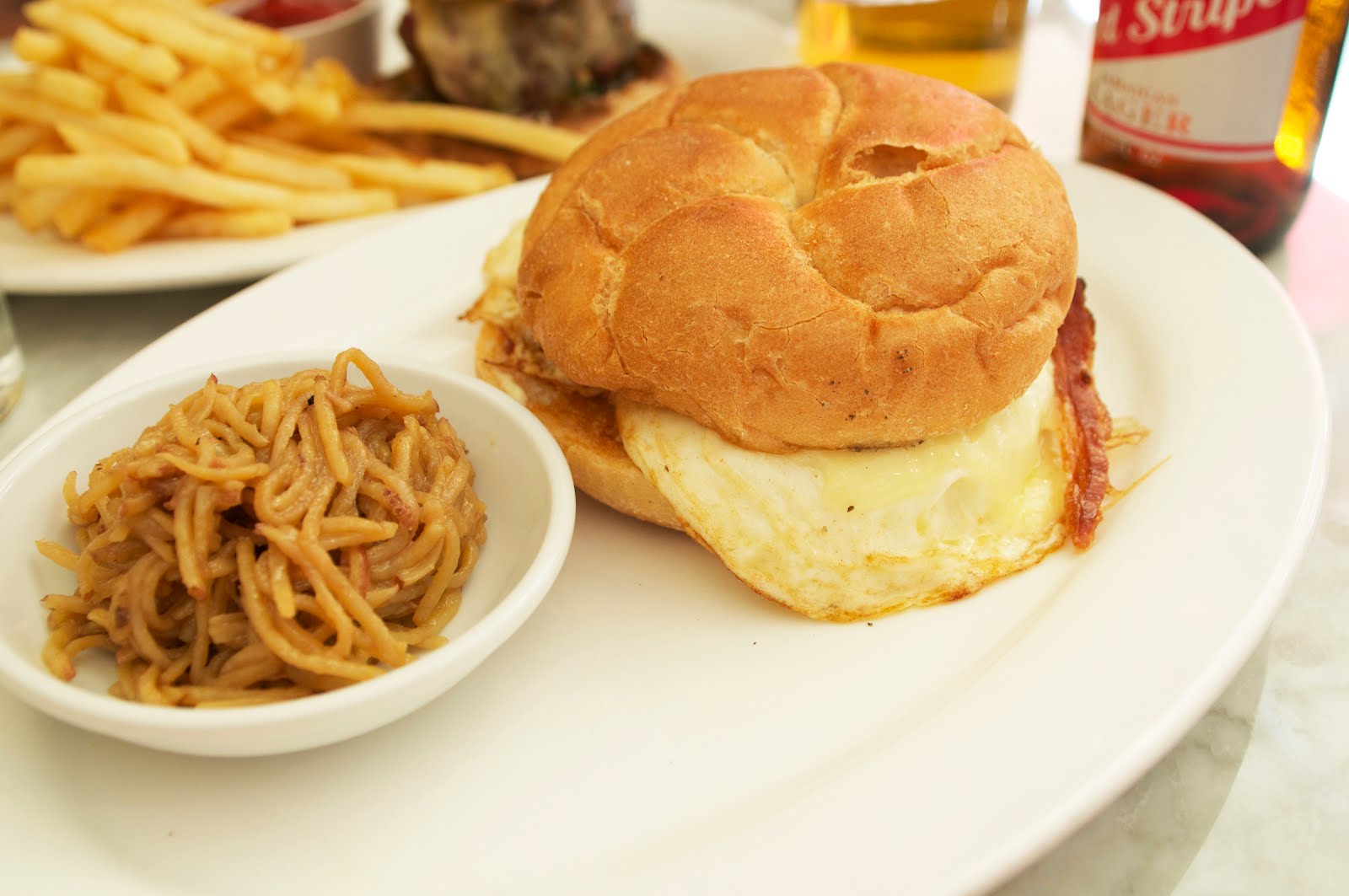
Happy New Year to you all! I hope you celebrated to your heart's content! Me, well... We were supposed to go out into the countryside,
like last year, but I got sick. Nothing serious, but I was not up to frolicking in the snow, or even driving over to the chalet. So we just stayed in, and Laurent made us
cacio e pepe spaghetti for dinner - not quite typical for a New Year's feast, but it was exactly the comfort food I needed.
My cold took a long time to heal, but yesterday I was finally up to cooking. Again, I veered toward comfort food, and made
chowder. However, once again, it wasn't quite traditional.
I call this chowder "almost kosher" because it contains no pork. It does, however, contain dairy and chicken, so the title of fully kosher is out the window. But that doesn't really matter, since there is not an ounce of Jewish blood in me. So why did I substitute the pork? Simply because I had a lot of
schmaltz to use.

(One needs to be very careful when opening what looks like a jar of jam in our house, because they usually contain something else.)
Why did I have schmaltz on hand? Well, it all started several month's ago, when I read David Sax's
Save the Deli. I'll post more extensively about this book later, but suffice it to say the author went on a North American tour of Jewish delis, ate a heck of a lot of pastrami and chicken soup, and schmaltz is inevitably mentioned on every other page. Schmaltz, you're probably aware, is rendered chicken fat, and can replace most oils and fats in cooking. I was intrigued by how this influenced the taste of preparations; duck fat makes a big difference, so what of schmaltz?
Unfortunately, I had no idea where to find schmaltz. But since we were already regularly buying whole chickens, boning them, and saving the carcasses to make stock, I took it one step further, and started putting aside all the chicken skin and fat, and saving it in a Ziploc bag in the freezer. Then, when the bag was full, and I had over three pounds of fatty scraps, I rendered it, using the method indicated in Jennifer MacLagan's
Fat. Thus, I ended up with two full cups of beautiful schmaltz, and a cup full of
gribenes, which are basically
chicken cracklings: the crispy bits of skin left over from the rendering process. I usually don't eat the skin off roast chicken, but this was something else: so crispy and delicious! We put them in soups, salads, and even just nibbled on them.
So, the gribenes were easy to dispose of, but for some reason we've been slow to use the schmaltz. Like I said, it can replace butter in most recipes, but we were so overloaded with leftovers (ours and other people's) that we didn't cook for several days. And when we did, they weren't really the kind of recipes where the substitution would be made.

So when I decided to make chowder, I was determined to use the stuff. I drew inspiration from a recipe by Jamie Oliver, but used schmaltz instead of pork fat, and the remaining gribenes instead of bacon. I also adapted the broth-to-dairy ratio. Obviously fresh corn would have been best, but in this season, canned corn had to do. And I used
Nordic shrimp, for a local touch.
There was definitely a subtle difference in flavour: less smoky than if I had used bacon, but still more gamey than if I had used butter. I wouldn't say any version is flat-out better than the others, but it's nice to have options. Either way, this soup is a very flavourful and easy meal for a lazy weekday.
Schmaltz and Gribenes450 g (1 pound) or more of chicken fat and skin
Cut the chicken skin in small pieces. Place them in a heavy-bottomed pan over low heat, and let the fat melt, stirring occasionally, until the skin begins to grow crispy. This can take several hours (between two and four).
Alternately, if you are rendering a large amount of fat, put the chicken skin in a Dutch oven and place in an oven preheated to 120ºC (250ºF). Bake until skin begins to grow crispy, which will take several hours.
In both cases, when the skin is just getting crispy and brown, drain out the rendered fat and strain it through a cheesecloth into a heatproof container. Return the skin to the pan and cook over medium low heat until it is very crispy golden brown. Strain the remaining fat through the cheesecloth, and place the skin on paper towels to absorb the fat.
Store the schmaltz in a clean airtight container in the fridge for up to two weeks. Store the gribenes similarly, and consume them within a couple of days. You should obtain approximately 1 cup of schmaltz for every pound (450g) of chicken skin.
Almost Kosher ChowderAdapted from Jamie Oliver's Food RevolutionServes 4-62 tbsp schmaltz
One leek, cut in half lengthwise and sliced crosswise
450g (1 pound) of potatoes (approximately 3 large), peeled and cubed
500 ml (2 cups) chicken or vegetable broth
500 ml (2 cups) milk
375 ml (1 1/2 cup) canned or frozen corn
225 g (1/2 pound) Nordic shrimp, fresh or frozen and thawed
250 ml (1 cup) heavy cream
For garnish:Gribenes
Fresh dill
Fresh red chili pepper, seeded and chopped
In a large saucepan, melt the schmaltz over medium heat. Add the leek and potatoes, and cook, stirring often, until leek is soft. Add the broth and milk, along with the shrimp and corn, and simmer for 10 minutes, until potatoes are tender and soup is somewhat thickened. Reduce heat, stir in the cream, and continue cooking until heated through.
Divide in bowls and top with garnish just before serving.